
Chemical Endurance: The Pharmacology of Russian Military Stimulant Programs
Recent reporting on the Russian military’s pharmacological stimulant programs – most notably from the Robert Lansing Institute – correctly identifies the recklessness of stimulant-centered force management. But the chemistry is described far too loosely. The real question is not whether these compounds can increase arousal, suppress fatigue, or temporarily improve task persistence. Many can. The real question is whether they’re the right tools for the job. What kind of neurochemical debt do they create when they are layered together under field conditions defined by sleep loss, caloric deficit, dehydration, sustained threat exposure, and poor medical supervision?
This post revisits the reported toolkit more carefully. Where the evidence is direct, it is stated directly. Where the conclusion is inferential, it is labeled as such.
Before diving into the specific drugs, it helps to understand the general logic. Every compound in this toolkit targets one or more of the brain’s arousal and fatigue-regulation systems – networks of neurons that use chemical messengers called neurotransmitters (primarily dopamine, norepinephrine, histamine, and glutamate) to control wakefulness, motivation, attention, and the perception of effort. The drugs either increase the supply of these messengers, slow their removal from the gaps between neurons, or alter the sensitivity of the receivers. Some do more than one simultaneously. At first, this results in a soldier who feels less tired, more focused, and more willing to continue operating. Yet the deferred result – hours or days later – is a nervous system that has been driven past its ability to recover normally.
The Russian Combat Kit: Loxidan
Loxidan is known to be a combination preparation containing two drugs: bromantane and mesocarb (also known as sydnocarb). Neither compound will be familiar to most Western readers. Both were developed within the Soviet and post-Soviet pharmaceutical tradition, and the Soviet pharmacopeia was very much its own thing. Neither drug has ever been approved for use in the United States or the European Union.
Loxidan reportedly contains 10mg of bromantane and 10mg of mesocarb per tablet. Instructions indicate that optimal single doses are 2-6 tablets, and that total daily doses should be 4-10 tablets, divided across the day.
Bromantane: A Soviet-era performance drug with an unusual mechanism
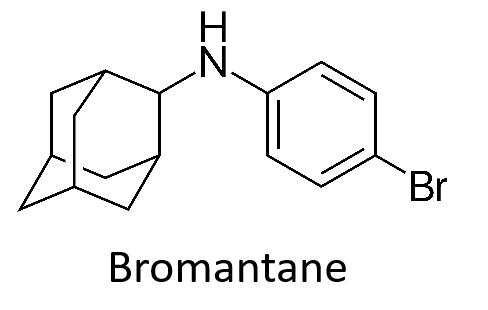
Bromantane (chemical name: N-(2-adamantyl)-N-(4-bromophenyl)amine) belongs to a class of drugs the Soviet pharmacological establishment called actoprotectors – compounds designed to improve physical and mental work capacity under stressful conditions. If that sounds like a stimulant, it partly is. But the distinction Soviet pharmacologists drew is in the shape of the response. A classical stimulant like amphetamine produces a sharp, intense spike in arousal followed by a steep crash. An actoprotector is supposed to produce a steadier, more gradual enhancement with a less punishing withdrawal. Whether that always holds depends on context, dose, and duration. (As an aside, I have personally tried bromantane, “Ladasten” brand, and it was less of a stimulant than a weak cup of coffee. I am less certain as to whether physical and mental work capacity improved; in any case the effect was quite weak.)
The strongest mechanistic claim that can be made about bromantane is that it has dopamine- positive activity with an atypical profile. Dopamine is the neurotransmitter most directly involved in motivation, reward, and the willingness to sustain effort. Most drugs that increase dopamine do so by releasing it from storage inside neurons (as amphetamine does) or by blocking the molecular pump – the dopamine transporter (DAT) – that normally vacuums dopamine back out of the synapse after it has been released (as cocaine and methylphenidate do). Bromantane appears to work differently. Russian preclinical work linked it to increased expression of tyrosine hydroxylase (TH) and aromatic L-amino acid decarboxylase (AADC), the two enzymes that govern the production of dopamine from its amino acid precursor, tyrosine. In simpler terms: Rather than dumping out stored dopamine or trapping released dopamine in the synapse, bromantane appears to raise the neuron’s manufacturing capacity for dopamine.
This would strongly imply that bromantane ought to be paired with L-Tyrosine or an efficient BBB-permeable derivative like L-tyrosine methyl ester.
That’s not the whole story, though. Older work also reported that bromantane can inhibit dopamine reuptake at high concentrations, and broader serotonergic effects have been noted. It should not be treated as a single-mechanism agent. A fair summary is that bromantane biases catecholaminergic systems upward by more than one route, with the biosynthetic pathway being the most distinctive feature at physiological concentrations. [1]
The military value is clear: In theory, a soldier on bromantane experiences reduced perceived fatigue, improved task persistence, and steadier motivation. The military risk is equally clear, if less immediately visible: Chronically upregulated dopamine production forces the receiving neurons to adapt. Receptors desensitize. When the drug is withdrawn, the system has been recalibrated around an elevated dopamine supply that is no longer present. This tends to result in a crash.
Mesocarb (Sydnocarb) – The other half of Loxidan
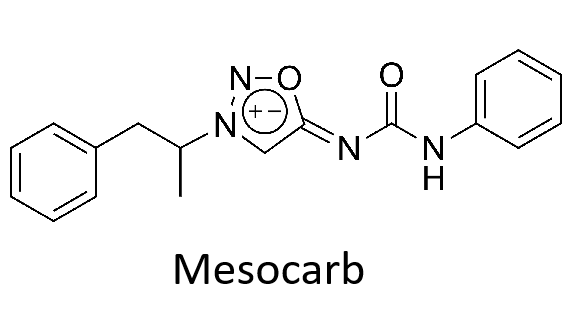
Mesocarb is often lazily described as “an amphetamine derivative.” That is chemically wrong and pharmacologically misleading. Mesocarb, also known as sydnocarb, is a sydnonimine – a compound built around a heterocyclic ring system that has nothing structurally in common with the phenethylamine backbone of amphetamine. It is also not an amphetamine precursor or prodrug; though it can look like one if you squint (an amphetamine-like backbone is on the left side of its structure in the image attached) it’s not metabolized that way – it remains intact. So calling it amphetamine-like leads people to expect amphetamine-like behavior, and mesocarb does not quite deliver that.
So what does it do? In animal studies, mesocarb produces a modest but long-lasting increase in the concentration of dopamine outside neurons – more gradual in onset and lower in peak
intensity than amphetamine. Recent molecular work has clarified why: Mesocarb appears to act as a noncompetitive or allosteric inhibitor of the dopamine transporter, rather than blocking the transporter in the same direct way that cocaine does.[2] The practical difference is that sydnocarb’s dopamine-enhancing effect builds more slowly and dissipates more slowly. It doesn’t produce the sharp euphoric rush of amphetamine or cocaine, but it sustains a moderate elevation of dopamine signaling over a longer window, which is exactly what a military application wants.
Mesocarb has also been described as acting on the norepinephrine system (the neurotransmitter network responsible for alertness, vigilance, and the fight-or-flight response), but the strongest contemporary evidence is specifically about its dopamine transporter interaction. The cautious description is: Mesocarb is an atypical, DAT-active psychostimulant with probable broader catecholaminergic consequences.[2][3]
Why Loxidan is clever – but why it’s a poor fit
The combination logic should now be apparent. Bromantane increases the neuron’s capacity to produce dopamine. Sydnocarb slows the rate at which released dopamine is cleared from the synapse. Together, they create a compounding elevation of dopamine signaling that is smoother and more durable than either drug alone – a dual dopaminergic throughput strategy.
The failure mode is the mirror image of the sales pitch. By pushing dopamine signaling upward from two directions simultaneously, the combination also delays and deepens the system’s eventual need to normalize. Neurons that have been bathed in excess dopamine for 36–48 hours – the operational window the Russian military reportedly targets – do not snap back to baseline when the drugs wear off. Receptors have downregulated. The biosynthetic machinery may be cofactor-limited: Tyrosine hydroxylase requires a molecule called tetrahydrobiopterin, or BH4, which can be depleted under sustained enzymatic demand. Sleep debt, invisible while the drugs were active, asserts itself.
A more rigorous description of what happens is homeostatic overload: The convergence of catecholaminergic adaptation, accumulated sleep debt, worsening cortical control, and sympathoadrenal strain. [1][5] That’s not what you want if you’re in the trenches.
Is there a “right” way to use Loxidan for infantry? Not exactly – it’ll never be something that you want to take regularly. Can it be improved if you add tetrahydrobiopterin to the stack? No – dietary or pharmaceutical BH4 has practically zero ability to cross the blood brain barrier. A BH4 precursor, sepiapterin, however, does cross the blood brain barrier and increases levels of BH4 in the brain, potentially rescuing it from depletion. Sepiapterin is, however, extremely expensive; despite being a natural compound that all humans produce endogenously, it was recently approved as a pharmaceutical – and its US price looks to be $41,000 per patient, per month. As it’s difficult to extract or synthesize, it’s not something that can be had cheaply on the bulk API market, either.
You can boost Loxidan much more cheaply by taking some L-tyrosine along with it, as mentioned previously, but I’d expect this to be of only slight utility. It’s important to note that N-Acetyl-L-Tyrosine (NAT, NALT,) would not be useful at all, as it doesn’t convert to L-Tyrosine efficiently.
UR-1: An Experimental Preparation Based on Modafinil
The next Russian combat drug, UR-1, is based on modafinil, a wakefulness-promoting drug that will be more familiar to Western readers. (See also.) Modafinil, marketed under the brand name Provigil, was developed in France in the 1970s and has been approved in the United States since 1998 for the treatment of narcolepsy, shift-work sleep disorder, and obstructive sleep apnea. It is also the drug most associated with military wakefulness programs in NATO countries, where it has been used by pilots, special operations personnel, and command staff during sustained operations.
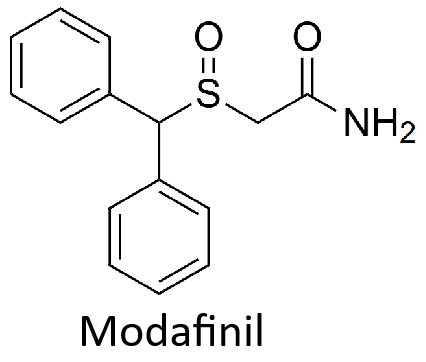
Modafinil is often described as a “clean” wakefulness promoter. Compared to amphetamine, it is less obviously psychoactive. In the absolute sense, it is not clean at all. Its mechanism of action is plural and still not fully resolved, even after decades of research. The best-supported model includes several simultaneous effects:
(1) Low-affinity dopamine transporter (DAT) interaction: Modafinil does increase synaptic dopamine, but modestly – enough for wakefulness, well below the threshold for euphoria or the reinforcing cycle that drives addiction with high-affinity DAT blockers.
(2) Orexin/hypocretin system activation: Orexins are neuropeptides – small signaling molecules – produced in a region of the brain called the lateral hypothalamus. The stabilize the waking state by driving excitatory input into the brain’s arousal centers. Modafinil appears to reinforce this system, essentially propping up the brain’s own
architecture for staying awake rather than overriding it.
(3) Histamine release: Modafinil increases histamine signaling from the tuberomammillary nucleus, another key arousal center. (This is the same system that antihistamines – allergy pills – suppress when they make you drowsy. Modafinil pushes things in the opposite direction.)
(4) Reduced GABA signaling: GABA is the brain’s primary inhibitory neurotransmitter – the chemical brake pedal. Modafinil appears to reduce GABA release in sleep-promoting brain regions, lowering the threshold for the brain to stay awake.
(5) Increased glutamate: Glutamate is the brain’s primary excitatory neurotransmitter. Modafinil raises glutamate levels in regions involved in working memory and attention. [5]
This multi-system profile is why modafinil works and why it is pharmacologically interesting. It is
also why it becomes dangerous when the context changes.
Supervised one-offs vs. regular use
When the US Air Force or the French military uses modafinil, it does so under a protocol: Individual medical screening, dose control, defined mission windows, and mandatory recovery sleep afterward. Modafinil has a long elimination half-life – roughly 15 hours – and significant interactions with liver enzymes (specifically CYP3A4 and CYP2C19) that metabolize other drugs.[6] Under controlled conditions, that pharmacokinetic profile is manageable. Under field conditions – repeated dosing, no medical screening, dehydration reducing liver blood flow and slowing drug clearance, concurrent use of other stimulants, no enforced recovery – it is a slow- building problem.
As it takes so long to flush out, the drug accumulates. Sleep pressure builds up – and, if you can sleep, it’s inevitably low-quality and less restful. After multiple days of this, the soldier enters a state where alertness and cognitive function have decoupled: Technically awake, mobile, and armed, but with degraded working memory, impaired threat assessment, and unreliable emotional regulation. That is the state military planners should fear far more than simple drowsiness. A sleeping soldier is non-functional but safe. A pharmacologically fragmented soldier makes decisions. [5][6]
Can modafinil be used effectively by infantrymen in the field? Probably not, at least not at scale. Its long half-life is poorly matched to the conditions of field use. Shorter-acting eugeroic analogs may therefore be more operationally relevant. Of these, hydrafinil is the most plausible: Although its human pharmacokinetics have never been rigorously mapped, the limited urinary elimination data suggest an apparent terminal half-life in the neighborhood of 5 to 10 hours. This is materially shorter than modafinil’s and therefore easier to integrate into a mission cycle. Flmodafinil entirely lacks publicly-accessible human pharmacokinetic data, but it is sometimes reported that its effects are shorter in duration than modafinil’s, and a 10-hour half-life has been floated – though this remains to be proven.
The 14-Day Maintenance Program: Metabolic Modulators and Nootropics
Beyond the acute combat kit, Russian military medical planners have reportedly developed 14- day pharmacological regimens for regular troops using a different class of compounds: meldonium, fonturacetam (phenylpiracetam), and Noopept. These are not stimulants in the classical sense. They are metabolic modulators and nootropics – a term for substances intended to improve cognitive functions like memory, attention, and mental endurance. Where the combat kit is designed to keep a soldier awake and fighting for 48 hours, the maintenance program is designed to keep a soldier’s cognitive and physical baseline artificially elevated over two weeks.
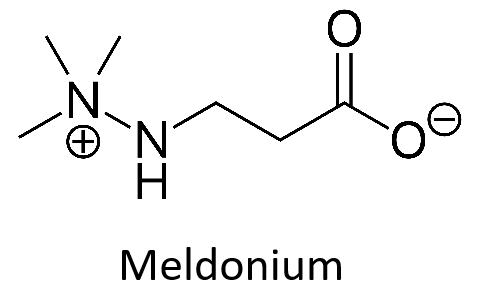
Meldonium: a legitimate heart drug repurposed as an endurance tool Meldonium (brand name Mildronate) became internationally notorious in 2016 when it appeared on the World Anti-Doping Agency’s prohibited list and produced a wave of positive tests among Russian and Eastern European athletes, most famously the tennis player Maria Sharapova. But meldonium is not a quack adaptogen. It is a real pharmaceutical with a coherent biochemical rationale, developed in Latvia and widely prescribed across the former Soviet Union for heart conditions.
To understand what it does, you need a brief detour into how cells produce energy. Cells can burn two main fuels: Glucose (sugar) and fatty acids. Both are fed into the mitochondria – the cell’s power plants – to produce ATP, the universal energy currency. Fatty acids are the preferred fuel for the heart under normal conditions, but they require more oxygen to burn per unit of energy produced. Glucose is less oxygen-hungry.
Meldonium works by blocking the production of L-carnitine, a molecule the cell needs to transport long-chain fatty acids into the mitochondria. Specifically, it inhibits γ-butyrobetaine hydroxylase (BBOX), the enzyme that performs the final step of carnitine synthesis, and also interferes with OCTN2, the transporter that moves carnitine into cells. With less carnitine available, the cell cannot import as many fatty acids for burning. It is forced to rely more heavily on glucose. [7]
The military logic is straightforward: Under conditions of limited oxygen delivery – hard physical exertion, high altitude, hemorrhage – glucose oxidation is the more oxygen-efficient fuel. A soldier on meldonium may gain a marginal endurance advantage because his cells are biased toward the more efficient energy pathway. Meldonium also reduces the accumulation of certain toxic fatty acid byproducts, providing some protection against ischemic injury (damage from inadequate blood supply).
The problem emerges in context. A drug that narrows the cell’s metabolic flexibility – its ability to switch between fuel sources – is defensible in a hospital patient on supervised therapy, or an athlete under the watchful eye of coaches and doctors. It is much less defensible in a soldier whose heart is simultaneously being driven harder by stimulant-induced catecholamine release, whose hydration and electrolyte status are compromised, whose dosing discipline is uncertain, and who may not get any rest for days on end. The heart is being asked to work harder while being denied its preferred fuel. There’s no free lunch; in the end, performance is likely reduced rather than improved [7]
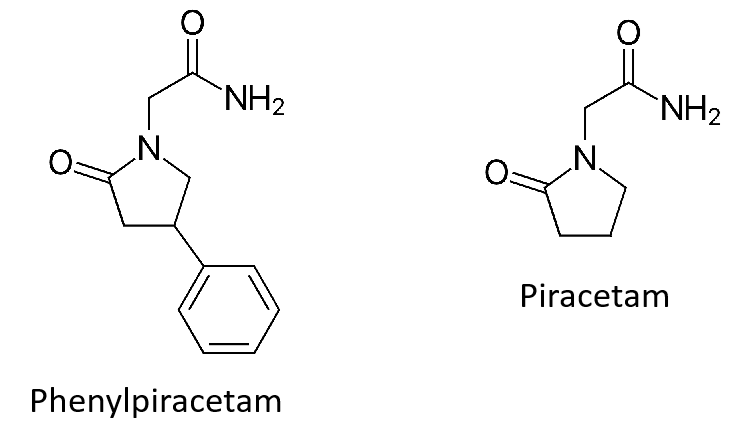
Phenylpiracetam: A brain-penetrant racetam with an incompletely resolved mechanism Phenylpiracetam belongs to the racetam family of nootropics – synthetic compounds built around a pyrrolidone ring structure, a chemical class that includes the grandfather of all nootropics, piracetam. Piracetam was first synthesized in 1964 by the Romanian chemist Corneliu Giurgea, who coined the term “nootropic” to describe compounds that enhance cognition without the side-effect profile of conventional stimulants. It was never widely adopted in Western medicine, but it became a mainstay of Soviet and post-Soviet neurological practice.
As its name indicates, phenylpiracetam is piracetam with a phenyl group attached to the pyrrolidone ring. That structural modification matters in two ways. First, it dramatically increases the drug’s ability to cross the blood-brain barrier – the selective membrane that keeps most circulating molecules out of the brain – meaning effective doses are much smaller (100–200 mg vs. piracetam’s 2–5 grams). Second, the phenyl group appears to introduce dopamine transporter activity that piracetam lacks entirely. Specifically, the most rigorous recent work has characterized S-phenylpiracetam (one of the two mirror image forms of the molecule) as a selective DAT inhibitor.[8]
What phenylpiracetam does beyond that is less settled than marketing copy suggests. It almost certainly sits in the broader racetam family of compounds associated with effects on neuronal membrane excitability, glutamate receptor function, and cholinergic signaling – all of which are relevant to cognition and attention. But the exact balance of mechanisms in the clinically used mixture remains incompletely mapped.
For the purposes of the Russian military program, the important point is simpler: Phenylpiracetam is a brain-penetrant compound with probable dopaminergic and broader cognitive-activating effects. Adding it to a regimen that already contains dopaminergic stimulants and a wakefulness agent means adding another layer of central nervous system activation to a brain that is progressively losing its biological capacity to recover. [5][8]
That said, phenylpiracetam itself is fairly gentle and mild, and it’s reported to be quite effective as a nootropic. If you wanted to give one such agent to troops, it wouldn’t necessarily be a bad option.
Noopept: Interesting neuroscience, limited battlefield relevance
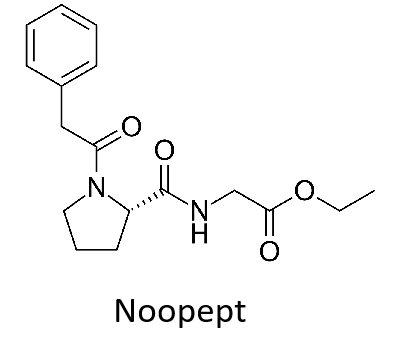
Noopept (chemical name: N-phenylacetyl-L-prolylglycine ethyl ester) is a very small peptide designed to mimic the activity of cycloprolylglycine, an endogenous brain peptide. It is dosed in milligrams rather than grams, which has led to the misleading claim that it is “1000x more potent than piracetam.” That is a dosing comparison, not a statement about the magnitude of its effect.
This drug is sometimes called “omberacetam” and is often lumped together with the racetams, but as the image above should make clear, it’s not a racetam at all – it doesn’t contain the piracetam moiety. As such, its effect and dosing potency are both distinct. “Noopept” – doubtless a condensation of “nootropic dipeptide” – is the much more fitting name.
The strongest specific evidence for Noopept’s mechanism comes from animal studies showing that it increases the expression of nerve growth factor (NGF) and brain-derived neurotrophic factor (BDNF) in the hippocampus – the brain region most critical for memory formation and
spatial navigation.[9] NGF and BDNF are neurotrophins: Proteins that support the survival, growth, and maintenance of neurons. Increasing their expression is, in principle, a good thing for a brain under stress.
The common claim that Noopept works primarily by enhancing AMPA receptor trafficking (AMPA receptors are the fast-acting receivers for glutamate, the brain’s main excitatory signal,) is plausible but not as firmly established as it is often presented. Likewise, an anxiolytic (anxiety-reducing) effect has been reported, but the precise receptor-level pharmacology is incomplete.
In a therapeutic context, Noopept’s neurotrophin biology is genuinely interesting. In a battlefield context – where the brain is simultaneously under assault from sleep deprivation, sustained threat, caloric deficit, and a stack of other pharmacologically active compounds – transient neurotrophin upregulation is unlikely to meaningfully offset the larger insult. [9]
Conclusion – And a Different Approach
The seductive part of stimulant doctrine is easy to see. Chemical assistance can temporarily convert poor reserves into seemingly usable manpower. But the conversion is not free. It is financed by biological liabilities that compound over time.
It is certainly not the case that these drugs are “bad” in every context. Each of the aforementioned drugs, taken individually, has a defensible pharmacological rationale. Bromantane is a genuinely novel approach to performance enhancement. Mesocarb is a CNS stimulant that compares very favorably with the amphetamines which are so common in the West. Modafinil is the most well-studied wakefulness agent in modern pharmacology. Meldonium has real cardioprotective applications. Phenylpiracetam and Noopept are credible nootropics.
The better description is that systemic combat pharmacology turns therapeutic logic into operational debt. A cardioprotective drug becomes part of a stacked endurance gamble. A wakefulness agent becomes a method for concealing unrepaid sleep debt. A nootropic becomes a fragile flourish on top of a failing stress system.
Systemic pharmacological stimulation is not a force multiplier. It is a temporal credit facility. It buys near-term output by drawing against later neurochemical stability, metabolic resilience, and recoverability.
That trade may be desirable – may even be ethically mandatory – in a tightly supervised pilot or an SOF mission on a defined mission window. It is a poor organizing principle for mass combat manpower who need to operate for weeks at a time.
To be charitable, that this post has taken the reporting – which, I’ll note, has been fact-checked – at face value. There’s very little knowledge as to how these drugs are being utilized in the field right now. Nations at war tend to correct their mistakes, and it could be that there’s a new combat drug protocol that works well enough.
The Replenishment Approach to Enhanced Readiness
And having said all of that, there is research — also from Russian institutions — that points toward a fundamentally different and more sustainable approach. A 2022 review published in Voprosy Pitaniia (Problems of Nutrition) by Kodentsova and colleagues at the Federal Research Centre of Nutrition, Biotechnology and Food Safety, with co-authorship from the Russian Ministry of Health itself, examined the evidence for specialized vitamin-mineral complexes (VMCs) designed for personnel operating under extreme physiological stress — including those deployed to active combat zones. The paper’s logic begins where the stimulant story ends: With the observation that soldiers under sustained physical and psychological load are not merely tired. They are micronutrient-depleted. Prolonged marching, caloric disruption, irregular eating, thermal stress, sleep loss, and psychological strain all accelerate the consumption of B vitamins (which are rate-limiting cofactors in glycolysis and the mitochondrial respiratory chain), antioxidant vitamins (C, E, A – consumed faster under oxidative stress), vitamin D (unavailable to personnel living underground or in shelters without sunlight), and key minerals including magnesium, zinc, iron, and iodine. Russian military surveys consistently confirm this: vitamin D deficiency was found in 75-100% of personnel serving in Arctic and northern conditions; B1 deficiency rates among conscripts rose from 28% in Autumn to 67% by Spring; combined deficiencies of vitamins A and E affected roughly half of law enforcement officers returning from combat deployments. [10]
The review’s conclusion is that a VMC providing B vitamins at 200-300% of the recommended daily intake, other vitamins at 100%, and minerals (magnesium, zinc, iodine, iron) at up to 50% – taken daily over one to six months – produced measurable improvements across multiple studies: increased serum vitamin levels and antioxidant capacity, improved functional adaptation and military-professional work performance, reduced symptoms of stress, anxiety, hostility, and fatigue, and enhanced self-reported health and mood. These are not dramatic effects. They are not going to keep a soldier awake for 48 hours or suppress the fear of incoming fire. But they address the actual biological substrate – the cofactor environment, the antioxidant defense system, the neuroendocrine resilience – on which both natural performance and recovery from stress rely. Where the stimulant approach borrows function from the future, the micronutrient approach attempts to protect the biological infrastructure that makes function possible in the first place.
The irony is worth noting. The same defense establishment that reportedly distributes Loksidan and UR-1 to front-line troops has, through its own nutrition research apparatus, produced evidence that the more effective long-term intervention is not pharmacological stimulation at all, but ensuring that soldiers are not fighting in a state of compounding vitamin and mineral deficiency. The stimulants are more interesting and certainly harder-hitting, but the VMC is much more sustainable in the long term.
I don’t know if the VMC is being issued, but it ought to be.
And there is a way to develop a useful combat stimulant/nootropic, but we’ll get into that another time. For now, suffice to say that it wouldn’t necessarily hurt to add something like Noopept to that VMC.
References
[1] Morozov IS, et al. [The mechanisms of the neurotropic action of bromantan]. Eksp Klin Farmakol. 1999;62(2):11-15. PMID: 10198757.
[2] Aggarwal S, Cheng MH, Salvino JM, Bahar I, Mortensen OV. Functional Characterization of the Dopaminergic Psychostimulant Sydnocarb as an Allosteric Modulator of the Human Dopamine Transporter. Biomedicines. 2021;9(6):634. PMID: 34199621. DOI: 10.3390/biomedicines9060634.
[3] Gainetdinov RR, et al. Effects of a psychostimulant drug sydnocarb on rat brain extracellular dopamine and its metabolites. Naunyn Schmiedebergs Arch Pharmacol. 1997;355(4):382-385. PMID: 9527506.
[4] Anderzhanova E, et al. Effects of sydnocarb and D-amphetamine on the extracellular levels of glutamate in the neostriatum of freely moving rats. Neurosci Lett. 2001;300(1):17-20. PMID: 11779041.
[5] Gerrard P, Malcolm R. Mechanisms of modafinil: A review of current research. Neuropsychiatr Dis Treat. 2007;3(3):349-364. PMCID: PMC2654794.
[6] PROVIGIL (modafinil) prescribing information. U.S. Food and Drug Administration. 2010 label revision.
[7] Dambrova M, et al. Pharmacological effects of meldonium: Biochemical mechanisms and biomarkers of cardiometabolic activity. Pharmacol Res. 2016;113(Pt B):771-780. DOI: 10.1016/j.phrs.2016.01.019.
[8] Zvejniece L, et al. S-phenylpiracetam, a selective DAT inhibitor, reduces body weight gain without influencing locomotor activity. Pharmacol Biochem Behav. 2017;160:46-53. PMID: 28743458. DOI: 10.1016/j.pbb.2017.07.009.
[9] Ostrovskaya RU, et al. Noopept stimulates the expression of NGF and BDNF in rat hippocampus. Bull Exp Biol Med. 2008;145(3):334-337. PMID: 19240853.
[10] Kodentsova VM, Zhilinskaya NV, Salagay OO, Tutelyan VA. Specialized vitamin-mineral supplements for persons in extreme conditions. Voprosy Pitaniia [Problems of Nutrition]. 2022; 91(6): 6–16. DOI: 10.33029/0042-8833-2022-91-6-6-16.
